
Gelco Chimney Sweep in Scottsdale: A Homeowner’s Guide
When a chimney company quotes you a “waterproofing treatment,” the product matters more than the word. Not all sealers behave the same on desert masonry, and a sealer applied to the wrong surface or without prep can trap moisture rather than keep it out. If you’ve ever been handed a quote listing “chimney waterproofing” with no product name attached, that’s the first thing to question. Ask what’s going in the bucket and why, and you’ll quickly learn which contractors know their materials. If you’d rather have a trained specialist evaluate the masonry before anything goes on it, call (888) 340-2124.
What Are Gelco Products Actually Designed to Do?
Gelco is one of the professional-grade product lines chimney specialists turn to for sealants, waterproofing, and masonry restoration. It isn’t a single product; it’s a category of treatments a trained technician matches to a specific condition. The core job is to keep bulk water out of masonry while still letting moisture vapor escape from inside the chimney. That sounds contradictory, and in a way it is: masonry is porous, and it takes on water from both directions. A sealer that only blocks rain from the outside while trapping vapor from the inside leaves you worse off than before.
That’s why the distinction between vapor-permeable and film-forming sealers matters so much in Scottsdale. Vapor-permeable sealers penetrate the surface and line the pores, allowing the wall to breathe. Film-forming sealers sit on top like a coat of paint, sealing the masonry in. On the wrong surface or after poor prep, a film-forming product can blister, peel, or hold moisture against the masonry until it spalls. Vapor-permeable treatments are typically the better fit for the sandstone and concrete block chimneys common on desert homes, because they let the wall dry from the inside out while shedding rain during monsoon season.
When Does a Scottsdale Chimney Actually Need Waterproofing?
Waterproofing is warranted when the masonry is actively absorbing and retaining water, not as a default line item on every quote. In our experience, the conditions that justify it in Scottsdale are specific: hairline cracks working through mortar joints after years of summer heat cycling, efflorescence (the white mineral crust left when water moves through masonry and evaporates off the surface), spalling where the face of a brick has flaked away, and visible saturation during or after monsoon storms. Any of these signals that water is getting in and needs a response.
But plenty of chimneys don’t need it. If your crown is intact, the flashing is sealed to the roof, the cap is doing its job, and the mortar joints are sound, you may simply have weathered masonry that’s holding up fine. Applying a sealer to a chimney with an unresolved leak source is upselling, and it often makes the underlying problem harder to find. Water coming into a chimney from a failed crown or a gap at the flashing should be fixed at the source before any coating goes on. The treatment seals sound masonry; it doesn’t repair the reason water was getting in.
This is where an inspection-first approach earns its keep. We document what we find before we recommend anything, so a waterproofing recommendation comes with photos of the condition that prompted it, not just a line on an invoice. If the chimney is sound, we’ll tell you that too.
How Professional-Grade Application Differs from a Hardware-Store Sealer
A tub of sealer from the home center and a professional chimney product share a name but not much else. The chemistry is different, and so is everything around it: surface prep, dilution, application method, and how long the product is expected to last. Here’s what separates the two in practice.
- Product chemistry. Professional lines like Gelco are formulated specifically for masonry substrates under real weather exposure. Consumer sealers are often blended for general-purpose use and may not be designed for the alkaline environment of mortar and concrete.
- Surface prep is a step, not a suggestion. Masonry has to be clean, dry, and ready before sealer goes on. That means removing dirt, efflorescence, and any old coating that won’t accept a new one. A sealer applied over chalky or damp masonry fails from underneath.
- Application method and coverage. Manufacturers specify application rates for a reason. Too little and you get uneven protection; too much and a vapor-permeable product can start behaving like a film. Trained applicators follow the product data sheet.
- Service life. A properly prepped and applied professional treatment is meant to hold up through multiple seasons and the long ultraviolet exposure of a desert summer. A poorly prepped consumer sealer can start failing after the first full sun cycle.
None of this means hardware-store products are worthless. It means the results depend heavily on matching the product to the masonry and doing the prep correctly, and that’s where the experience matters. The technicians we connect you with have up to experience working with these materials on desert chimneys.
What to Ask Before You Approve a Chimney Sealant Application
You’re allowed to interrogate the quote before you say yes, and a good contractor will welcome it. Here’s a short list of questions that separate a documented treatment plan from a guess:
- What product are you using, and why this one? Ask for the product name and a copy of the manufacturer’s data sheet. It should list the substrate it’s rated for, whether it’s vapor-permeable, and expected service life.
- What surface prep will you do first? The answer should name specific steps: cleaning, efflorescence removal, letting the masonry dry to the manufacturer’s moisture spec before application.
- What’s the weather window? Sealer needs to go on clean, dry masonry under the right temperature and humidity conditions. Ask how the schedule accounts for that.
- What’s covered under warranty, and for how long? Product warranties and workmanship warranties are different things. Find out which you’re getting and what voids it.
- Is there an underlying leak this won’t fix? Ask directly whether the waterproofing is being recommended on its own or as part of resolving a source problem like a crown or flashing issue.
Anyone quoting professional-grade product lines should be able to answer all five without hedging. If the answers stay vague, keep asking. We’re happy to tell you which product we’re using and why before we put it on your chimney.
How to Read the Results of a Proper Treatment
Thirty days after a correct application, the masonry should look mostly itself: a natural, matte finish, with no gloss, no chalky residue, and no visible film on the surface. It should still absorb a drop of water slowly rather than bouncing it off instantly, which is a sign the product is vapor-permeable rather than a hard film. On a sandstone or block chimney, the color may darken very slightly as the product cures and then return to its original tone as it thoroughly dries outward.
Signs that something went wrong are usually visible within that first month. Blistering, peeling, or bubbling at the surface points to trapped moisture or a product applied before the masonry was dry. White streaks or a powdery haze that wasn’t there before can mean efflorescence is still working its way out, or that the sealer is restricting vapor. A slick sheen almost always signals a film-forming product went on a surface that needed to breathe. If you notice any of these, it’s worth a call back to the contractor, because the longer a failure stays in place, the more it costs to correct.
Waterproofing is only one piece of a healthy chimney system. If the inspection also turns up a deteriorated flue, the fix is likely a different product line altogether, such as a flexible stainless liner or resurfacing system. That’s where working with multiple brands matters: the right material for the condition, not the only brand a contractor happens to carry. Copperfield, Olympia Chimney, and Famco are among the lines we work with alongside Gelco, and the choice always follows what the inspection actually finds.
When to Call a Pro
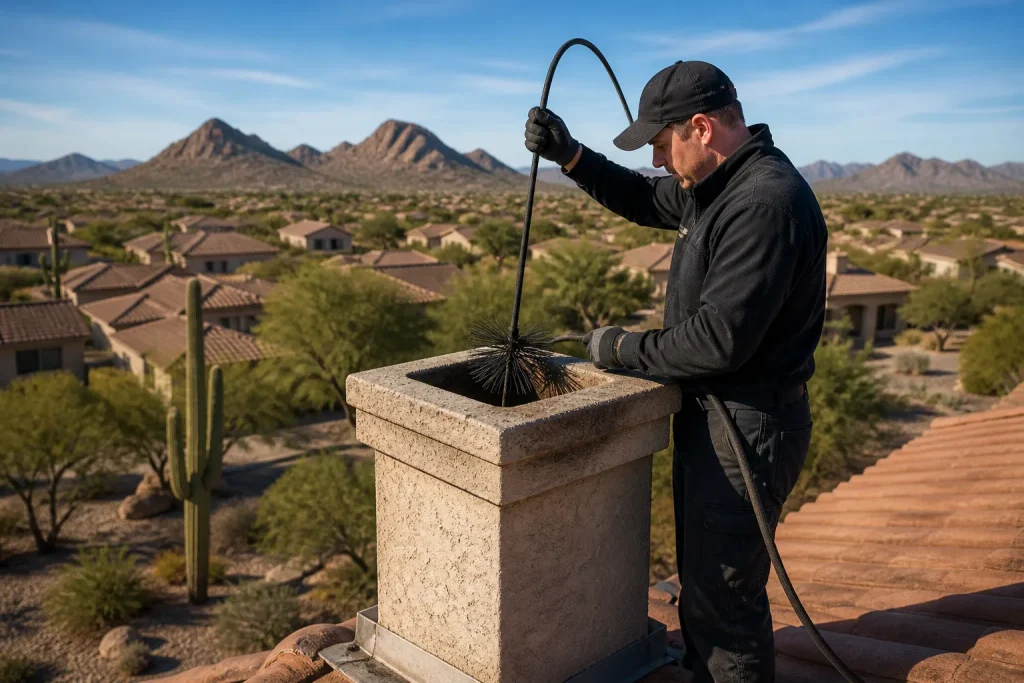
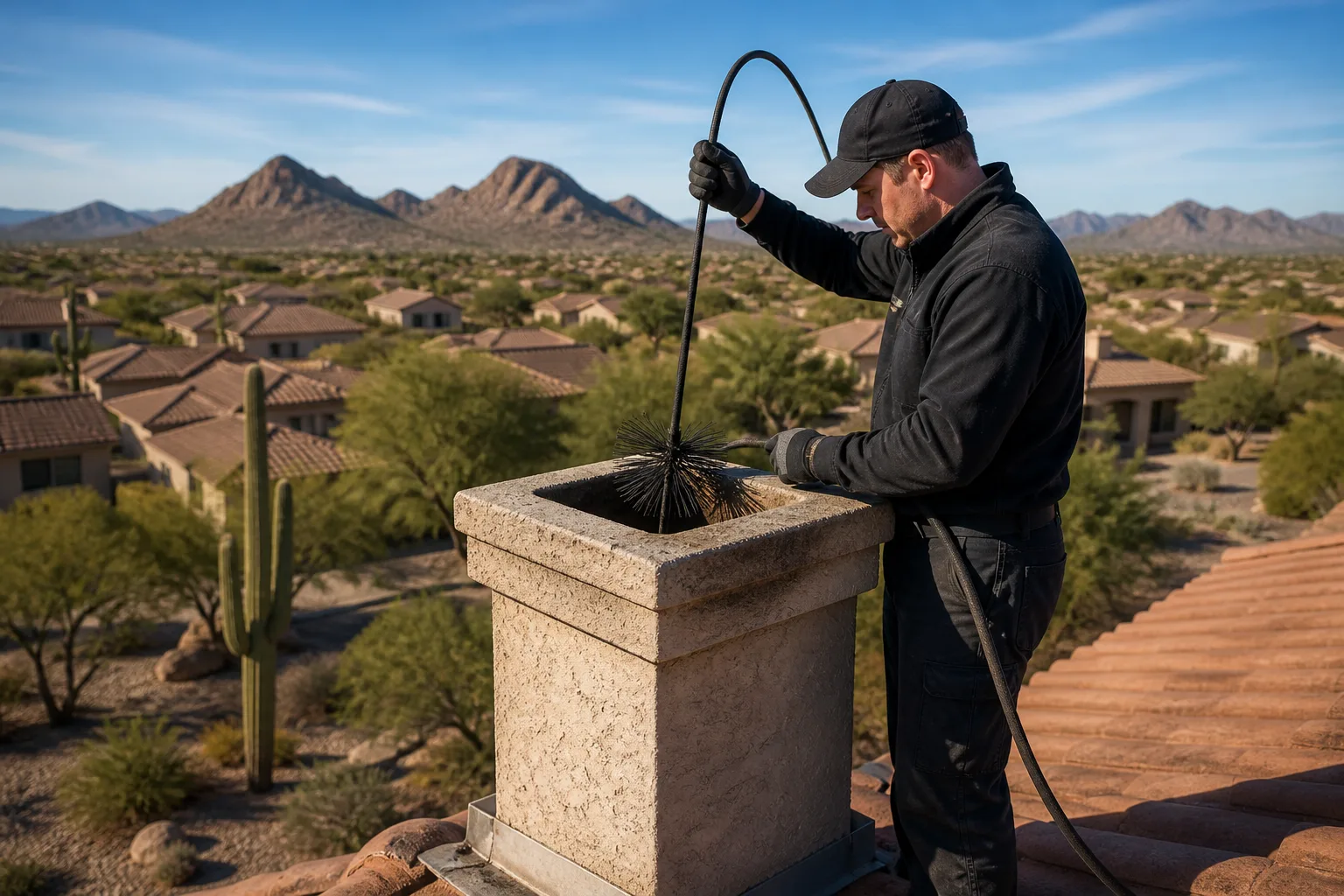
If the masonry shows spalling, persistent efflorescence, or active water saturation after a storm, that’s the point to bring in someone who reads the whole system before recommending a coating. Waterproofing is a targeted fix, not a default. A thorough chimney sweep and inspection is the first step in Scottsdale Chimney Sweep service, and if repairs like crown work or flashing are needed, we handle chimney repair as well, so the source gets fixed before any sealer goes on.
If you’re in Scottsdale and unsure whether your chimney actually needs a waterproofing treatment, call (888) 340-2124. We answer 24/7. Fast dispatch from 7am to 7pm, Sunday through Friday. The estimate is free, and we won’t recommend anything we can’t show you in a photo.
Frequently Asked Questions
Probably not. Waterproofing is warranted when there’s documented evidence of water absorption, efflorescence, spalling, or cracking at the mortar joints. If none of those are present and the crown and flashing are sound, we’ll tell you the chimney is in good shape. Call (888) 340-2124 for an exact quote on an inspection, and let the findings drive the recommendation.
You can, but the outcome depends on matching the product to the masonry and doing the surface prep correctly, which is where most DIY jobs go wrong. A vapor-permeable product has to be rated for your substrate, the masonry has to be clean and dry to spec, and the application rate matters. Call (888) 340-2124 for an exact quote on a professional application, and compare it against the cost of a failed job you’d have to strip and redo.
Within about 30 days, a correct application should show a matte, natural finish with no gloss, film, or chalky residue. If you see peeling, a slick sheen, or fresh white streaking in that first month, something went wrong, and it’s worth calling the contractor back to look. Call (888) 340-2124 for an exact quote on a follow-up assessment.
No. Waterproofing is a masonry treatment, not a substitute for a sweep or an inspection. Sweeping removes soot and creosote from the flue, and an inspection verifies the interior, the crown, the flashing, and the cap are all doing their jobs. A sealer applied over a chimney with an unresolved flue or leak problem just covers it up. Call (888) 340-2124 for an exact quote on the full service.
The Bottom Line
The word “waterproofing” on a quote tells you almost nothing. What matters is the product behind it, whether it’s vapor-permeable and matched to your masonry, and whether the surface prep and application followed the manufacturer’s spec. In Scottsdale, the desert sun cycling through masonry and the seasonal monsoon storms make the choice of sealer a real decision, not a formality. Ask for the product name, the prep steps, and the warranty before you approve anything, and walk away from anyone who won’t answer. If you’re in Scottsdale and need help, Scottsdale Chimney Sweep offers free estimates. Call (888) 340-2124. The written estimate sets the final price, and nothing gets recommended that we can’t show you documented evidence for.
Written by the team at Scottsdale Chimney Sweep.
Need Chimney Cleaning Help?
Call Scottsdale Chimney Sweep - licensed & insured, with free written estimates in Scottsdale.
(888) 340-2124